Cages
When it comes to cages, bigger is better. The good news is they are making them bigger than they used to. Two things you want to look for are stainless steel (which can be very spendy) or powdercoated. There are a bunch of styles out there, some better than others. As a general rule, no round cages, no super tall cages, and no teeny tiny cages. A bird needs to be able to stretch their wings out completely, and have room to walk around.
SMALL BIRDS

A 24”Wx24”D is going to be the minimum size cage for nearly any parrot, including lovebirds, budgies, and cockatiels. You don’t want anything smaller than this. It works well as a sleeping cage, or for a bird who comes out most of the day. For cage bound birds, at least 30” is ideal. Bar spacing is important with these guys, you don’t want anything larger than 1/2” or you risk them being able to get their heads stuck.
Thin wire cages are not appropriate for any birds, including finches and budgies. They simply aren’t sturdy enough nor do they provide space for the birds to exhibit natural behaviors like flying and hopping.

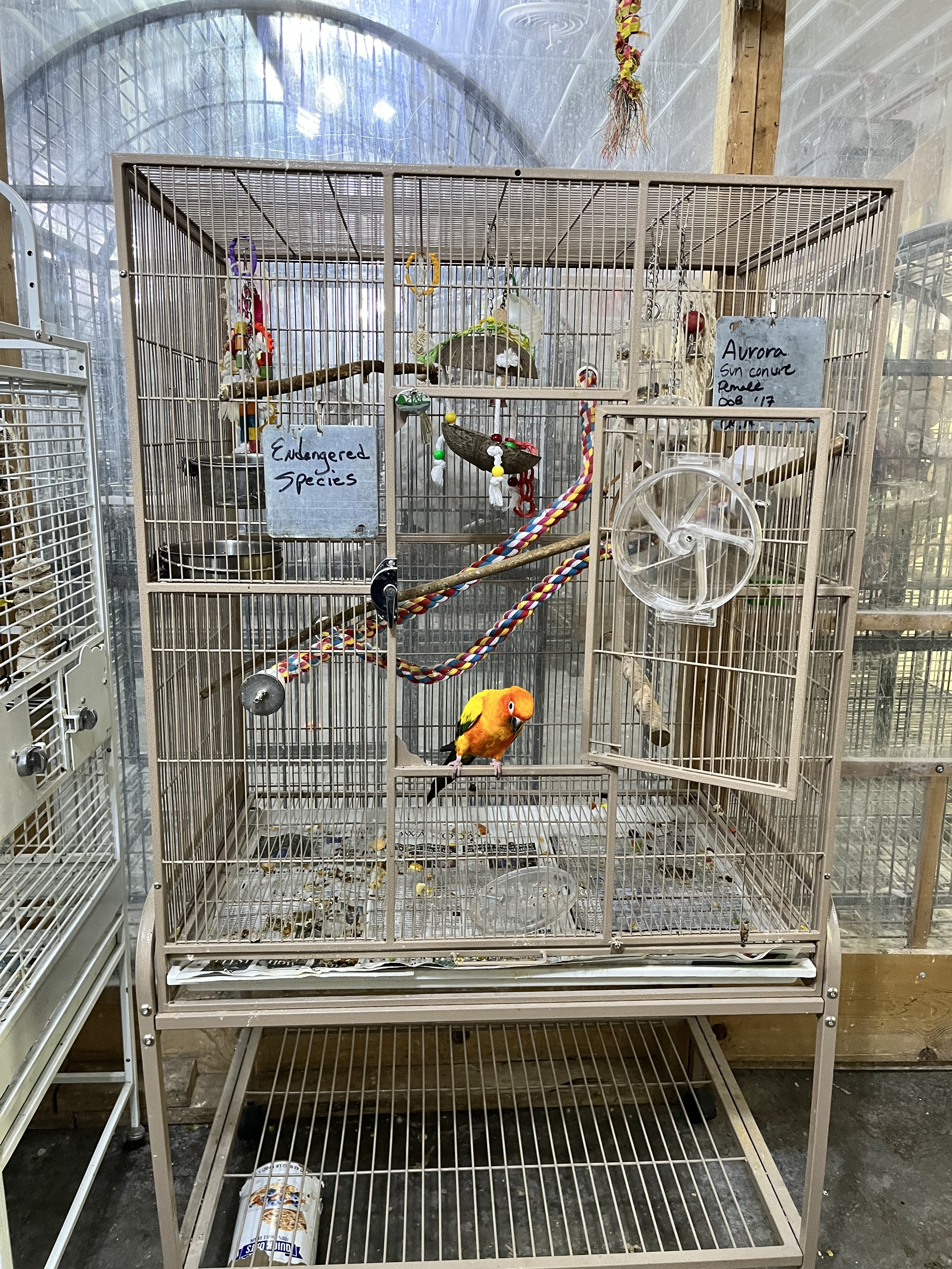
40” wide and 30” deep or similar are good for a medium to large conure. We prefer larger cages in homes, being these guys are super active and need more space than most realize.
The cage pictured on the right is the A&E flight cage, which runs between 200-250 on Chewy. It makes the perfect cage for small conures, but is PERFECT for budgies because of the small bar spacing! Petco carries a 38”x38”x64” cage that works nicely for larger conures, or cage bound birds. Anything in this size range is ideal.
MEDIUM BIRDS
SINGLE MACAWS


For single amazons, greys, eclectus, or small cockatoos, we like 36” wide by 30” deep or similar. Arch top and flat tops are mostly the same. We do prefer arch unless the bird is out most of the day, it gives just a little more head room. Both are easy to build play gyms on top of. (pictured left)
The minimum for single macaws, large cockatoos, or a pair of medium birds is 40” wide by 30” deep or similar. (pictured right)
LARGE COCKATOOS, MACAWS, MEDIUM PAIRS

This cage is 64” wide, 32” deep, and 74” high. We like these for large, active macaws, cockatoos, or unhandleable birds. It has a removable divider, but is NOT appropriate for two macaws unless they are a pair (no divider). This works particularly well for a pair of amazons, eclectus, greys, or similar.
XL BIRDS, COCKATOO PAIRS, MACAW PAIRS

We use these extra large doubles for our macaw pairs, it’s about 80” wide and 36” deep. They are suitable for single macaws who are very active, as well as large amazon pairs. They often come with a divider that can be used to separate two macaws comfortably. Next to an aviary, this is the largest cage you’ll likely be able to find.
Now and then, we have a bird that requires a handicapped accessible cage. Depending on the particular birds’ needs, you may need to raise the grate, add platforms, adjust bowls, or all of the above. The cage pictured is Ziggy, a Timneh grey who is a permanent resident and suffers seizures. He is on medication for them, but it is still necessary to have a high bottom that he can land on instead of falling all the way to the bottom of the cage. The grate is brought up to the bottom of the bowls, and secured with hose clamps. It can also be welded, if you’re handy like that.
HANDICAPPED CAGES

Small birds often need different adaptations, in the form of metal wire platforms called sundecks. We sew covers using fleece or wool pads and place them around so the bird can move throughout their cage with ease. With these decks, moving the grate is often unnecessary though there may be cases where the bottom still needs to be raised… For that, we can use poly rope/paracord and thick cardboard to form a web base for towels and newspapers to sit on.
Sundecks are also a good perch for non-handicapped birds for more variation. The covers can be purchased here, and the proceeds go directly to supporting our Rescue (made in house). Custom colors and patterns are available. Small Platform Covers Purchase Here
See Beaker’s Story for more pictures of handicapped accessible cages.


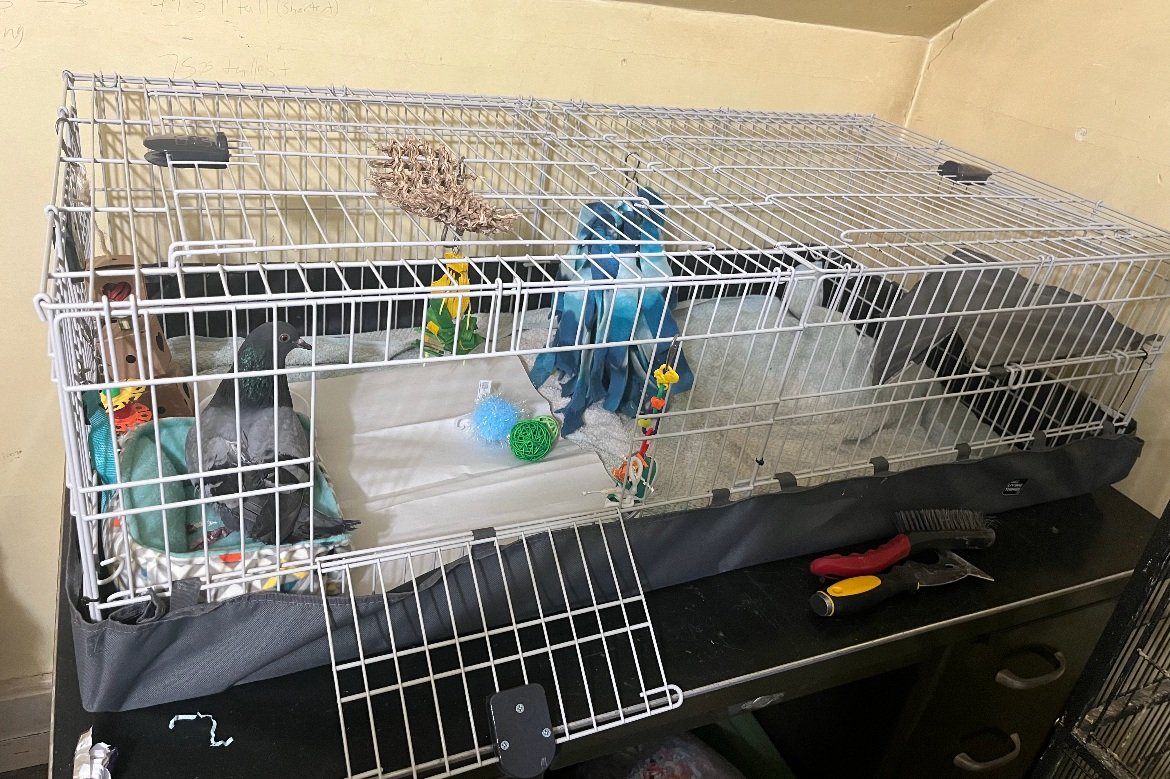
This cage is an adapted guinea pig cage, 8sqft, for a pigeon who has no use of his legs and only uses them to propel him around. This has given him more freedom of movement than any standard cage.


Grates are the single largest poop catcher in the cage, and need to be cleaned every time the papers are changed. We use wire scrapers and water to clean them off several times a week. All cages should be cleaned at minimum weekly, including cleaning off the grates, scraping out the tray, and replacing all substrate. We only use newspapers on the bottom of the cages due to the recyclability, no cost, and safety. It’s also very easy to see droppings on the papers so you can monitor your bird’s health. Some people use puppy pads, which are fine as long as they do not contain an attractant and the bird has NO access to them. They are not safe for birds to actually chew on. Pine or wood shavings are also not safe due to the concentrated natural oils. Paper pellets are safe provided the bird does not have access to eat them, but may be harder to monitor droppings. Corn cob substrate is too dusty and has a strong tendency to trap moisture and bacteria.
When buying second hand, it’s important to know what’s safe and what’s not. Many second hand cages will come rusty. For rusty and/or old cages, many auto shops can sand blast and powder coat the cage. It’s not super cheap, but it is cheaper still than a new cage. Another alternative for less extensive rust, though not as safe as re powder coating, is spot treating with Krylon FUSION spray paint. It must be the fusion line, which cure to aquarium safe. Any other type is NOT safe.
WHAT DO I USE IN THE BOTTOM TRAY TO CATCH POOP?
Here’s a few Amazon links we’ve found for appropriate sized cages. We don’t use all of these at the rescue-we only have A&E, Exotic Nutrition (Borneo-tested) and King’s-so we can’t vouch for the quality of the majority here. It’s on you to do the research as to whether or not it’s a good cage for your bird. These are simply very available cages that fit within the proper size range for each species.
Cage buying options on Amazon and Chewy
https://www.chewy.com/e-cage-company-flight-bird-cage-stand/dp/224168
Good Conure/Cockatiel/Caique/Quaker sized cage. A lighter A&E version, but still very sturdy. This cage does not come with good bowls but Petco carries some nice screw on “coop cups”.
Also excellent for budgie and finch flocks.


https://a.co/d/0WAThPn
Good Amazon/Grey/Eclectus sized cage.

https://www.chewy.com/prevue-pet-products-empire-bird-cage/dp/1220606
Another great option for a big big cage at a good price. Sufficient for macaws or cockatoos.
https://www.chewy.com/e-cage-company-elegant-style-flight/dp/224190
Our top pick for quaker, conure, Senegal, caique, or cockatiel cage. Made by A&E so they will last a very very long time. Bonus, two of the bowl holders are on the FRONT of the cage which makes for easier changes.
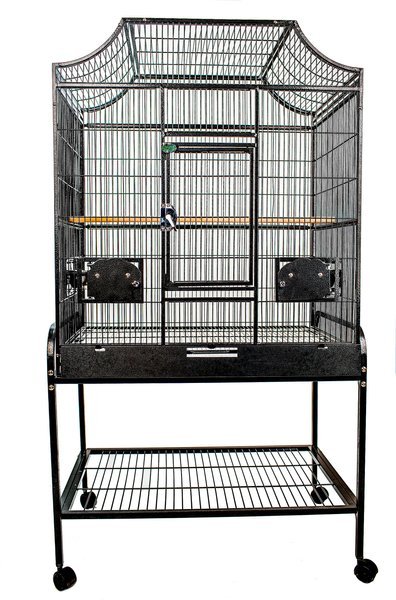

https://exoticnutrition.com/collections/cages/products/new-borneo-cage
A fantastic and cost effective option for Greys, Amazons, and the like. Small enough bar spacing for littles!

A decent sized cage for a Grey, Pionus, or Orange-wing Amazon. Likely too small for most large Amazon species.

https://a.co/d/bXlnOun
One of the larger cages for this price. Fit for a single Macaw or cockatoo!

https://a.co/d/gc7SUmi
Our personal favorite macaw cage. Double sized, or with a divider if you want to house two medium birds. Makes great use of the space with two greys or amazons. A bit thin wired for a heavy duty cockatoo, but may be fine for a gentler one.
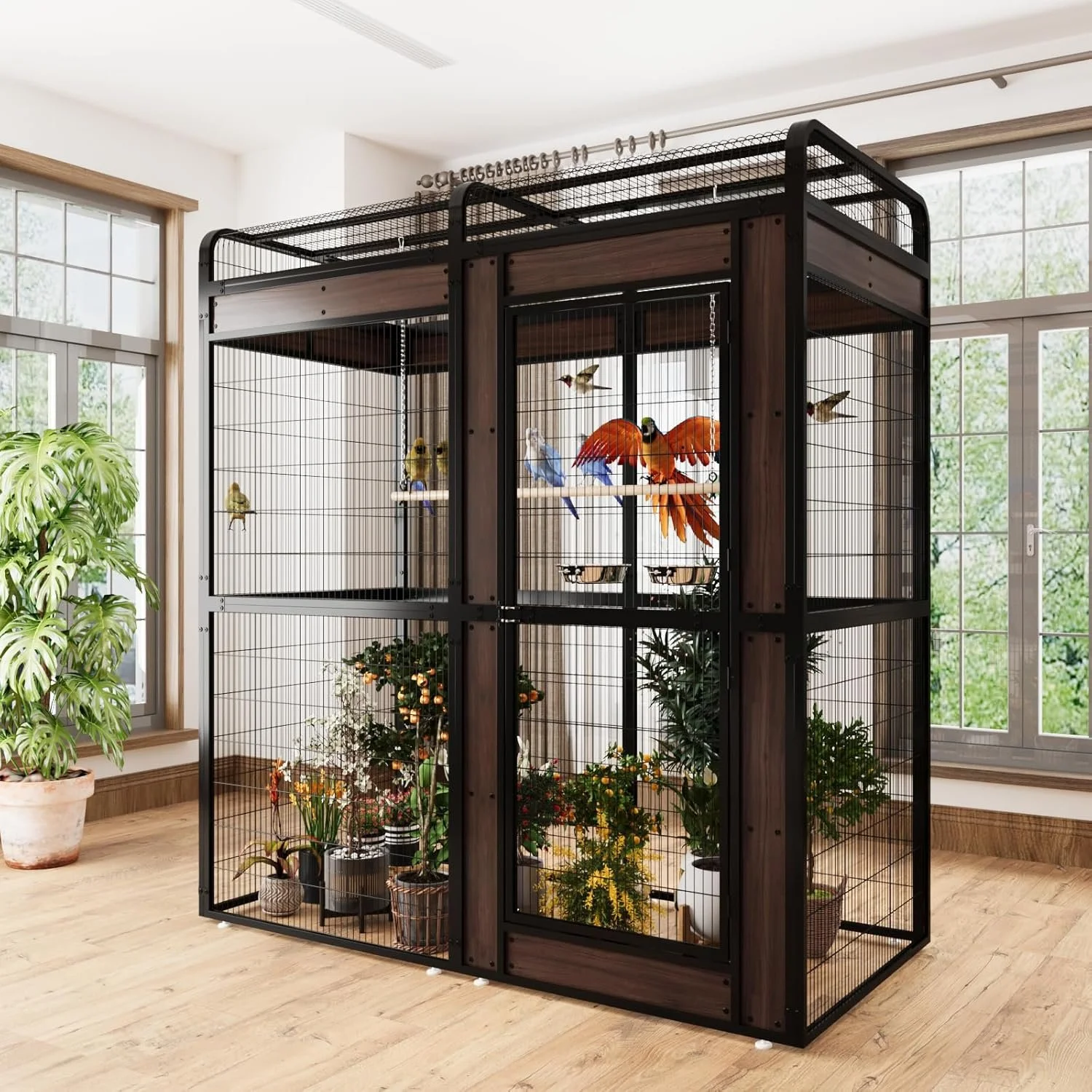
Technically an indoor aviary, but a GREAT option for those with macaws wanting to save some money on “standard” type cages. This offers the space many normal cages cannot at a really great price point. These cheaper aviaries often are NOT good for bar chewers, so keep that in mind for your bird. If they have a tendency to bite bars, don't opt for this one.